


Why Your Next Woven Bag Machine Decision Should Start With the EU's New Packaging Rules
If you supply woven bags to customers who export to Europe — or if you plan to — the rules of the game changed on August 12, 2026.
That is the date the EU's Packaging and Packaging Waste Regulation (PPWR) moved from paper into practice. Every bag entering the European market now needs to be designed for recyclability, meet strict material standards, and increasingly incorporate recycled content.
For PP woven bag producers in Southeast Asia, the Middle East, Africa, and South America, this is not a distant policy problem. It is a shop-floor problem. Mono-material structures, higher rPP ratios, and tighter tolerances are the new specs your customers are quietly rewriting into their purchase orders.
Key Takeaway: With EU PPWR enforcement underway, machine precision is no longer just a mechanical metric—it directly determines whether your high-rPP bags achieve commercial yield or pile up as costly factory scrap.
And here is the part most machine buyers are not pricing in yet: recycled PP behaves differently. Tape tension drifts. Weave picks up inconsistencies. Cutting edges fray where they used to hold. Sewing threads skip where they used to bite. Every variable that was “good enough” on virgin resin starts producing rejects once rPP content climbs.
This is the real PPWR cost: compliant bags, at commercial yield, on equipment that was not built for the material.
What the Market Is Actually Buying
The global demand for woven plastics machinery is projected to reach 0.8–1.6 billion USD by 2025, with an estimated CAGR of 3.6%–6.8% through 2030. Within that, bag conversion machines — the equipment that turns woven fabric into finished bags — are expected to grow at 4%–6% annually, reflecting expanding global demand for bulk packaging solutions.
But the growth is not uniform. The Asia-Pacific region is the largest market, led by India, China, and Southeast Asia, driven by high consumption of woven bags for food, grain, fertilizers, and cement. The Middle East and Africa remain key import regions for advanced machinery, particularly bag conversion equipment, fueled by large-scale infrastructure projects and agricultural packaging demand.
The message is straightforward: the demand is there. The question is whether your equipment can meet the material and compliance requirements that come with it.
What Separates a Machine That Works From a Machine That Lasts
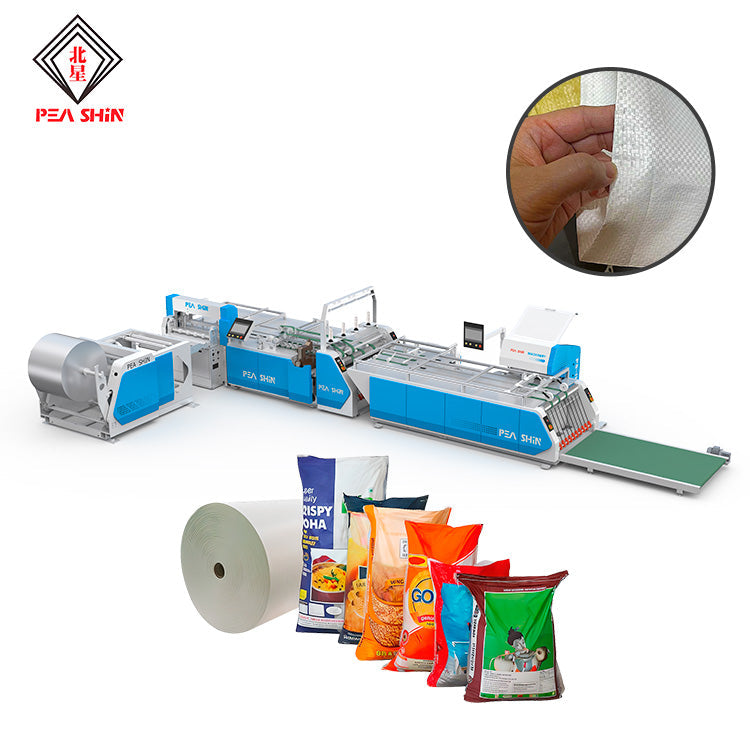
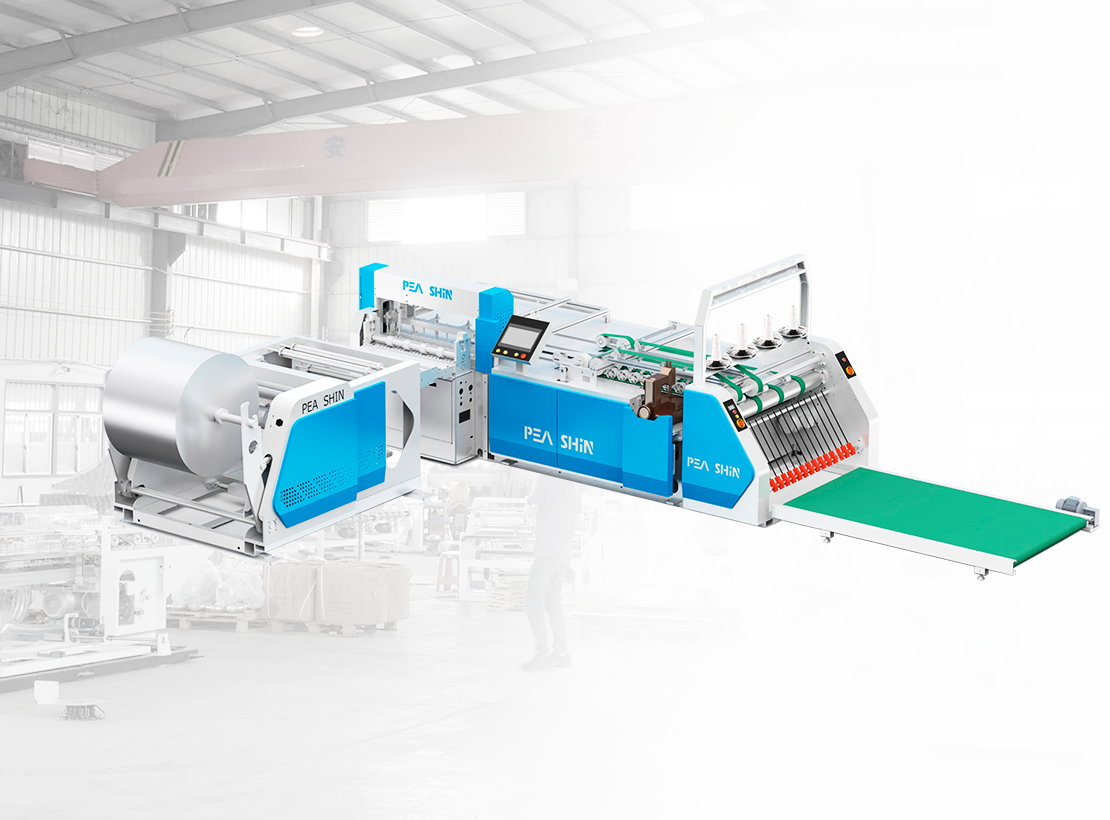
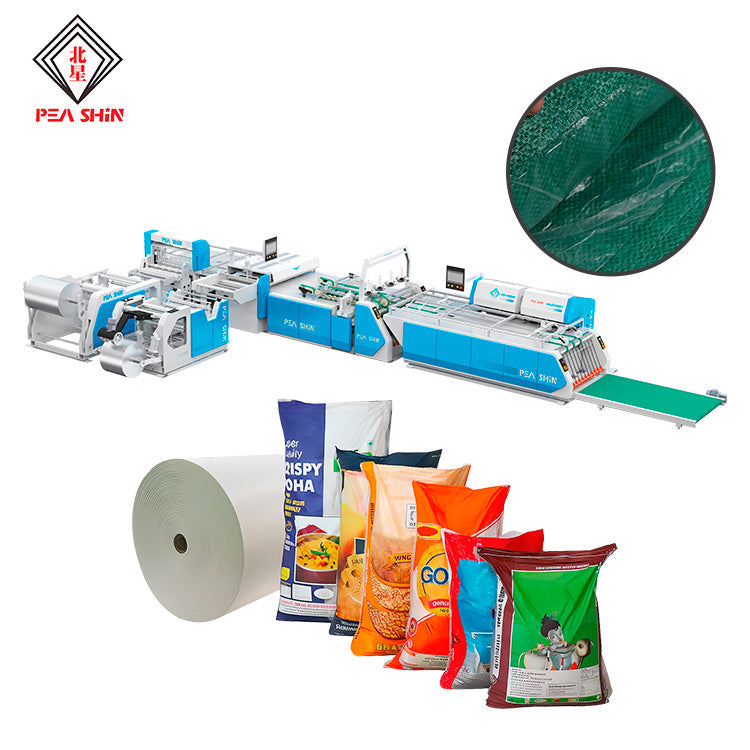
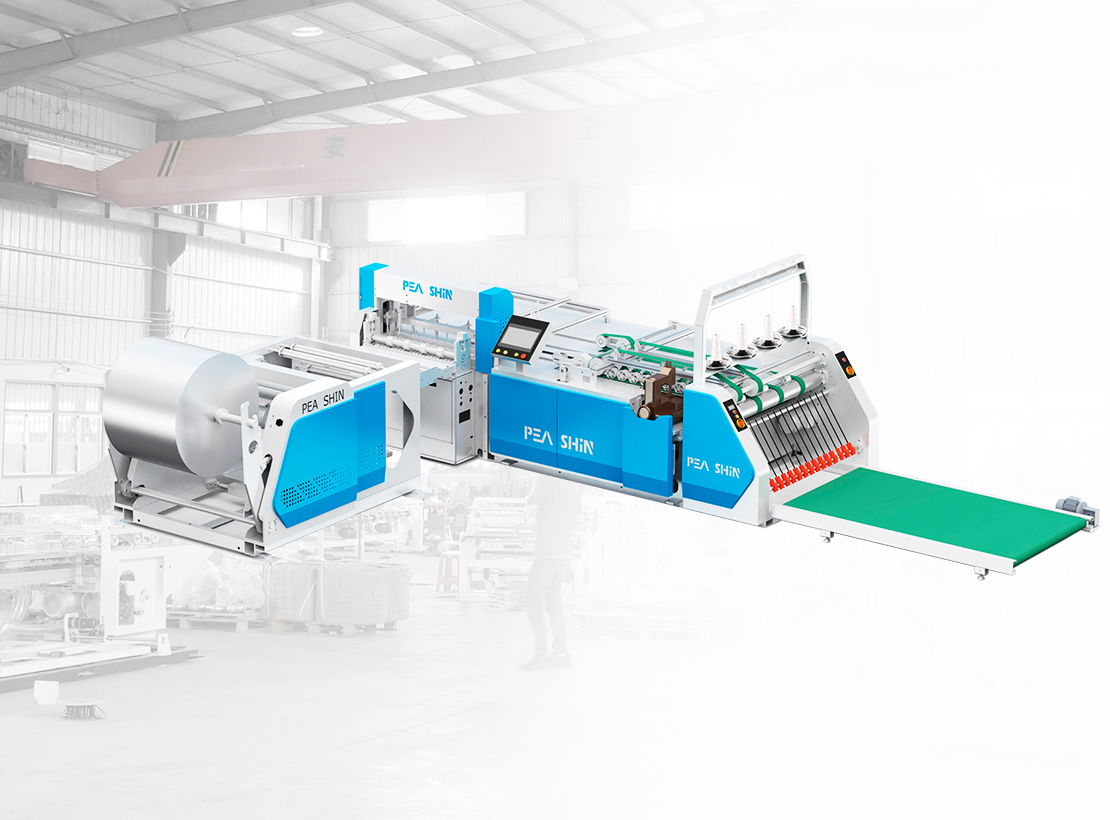
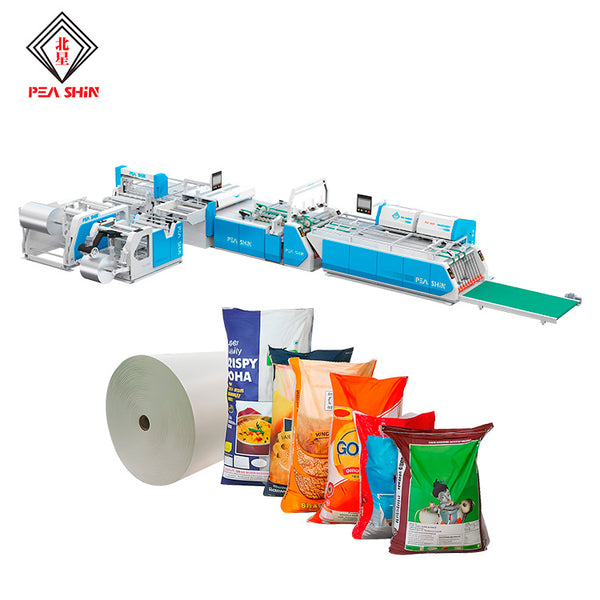
PEASHIN's Automatic PP Woven Bag Making Machine line was engineered against this exact reality. Here is what matters when the material gets difficult and specs tighten:
1. Servo-driven precision that holds when the fabric does not
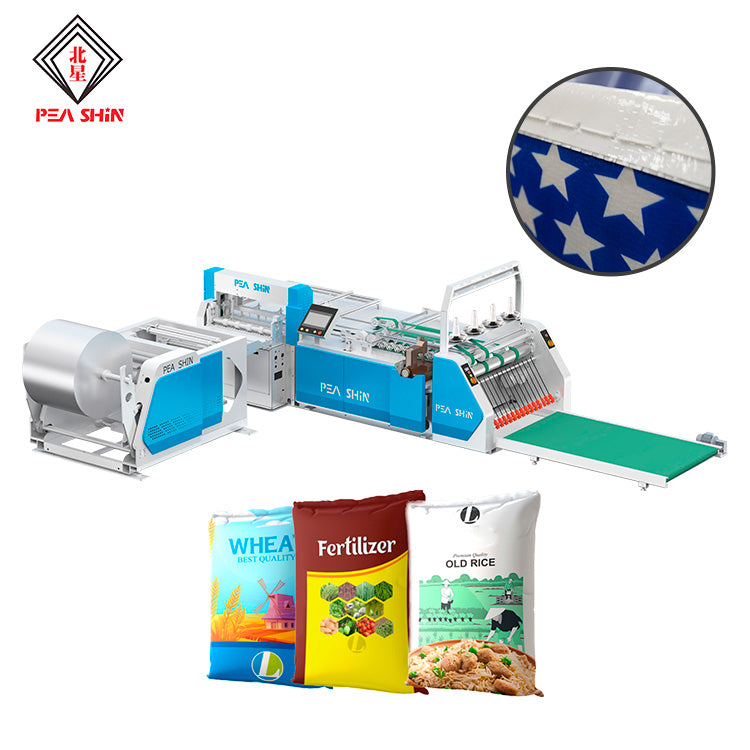
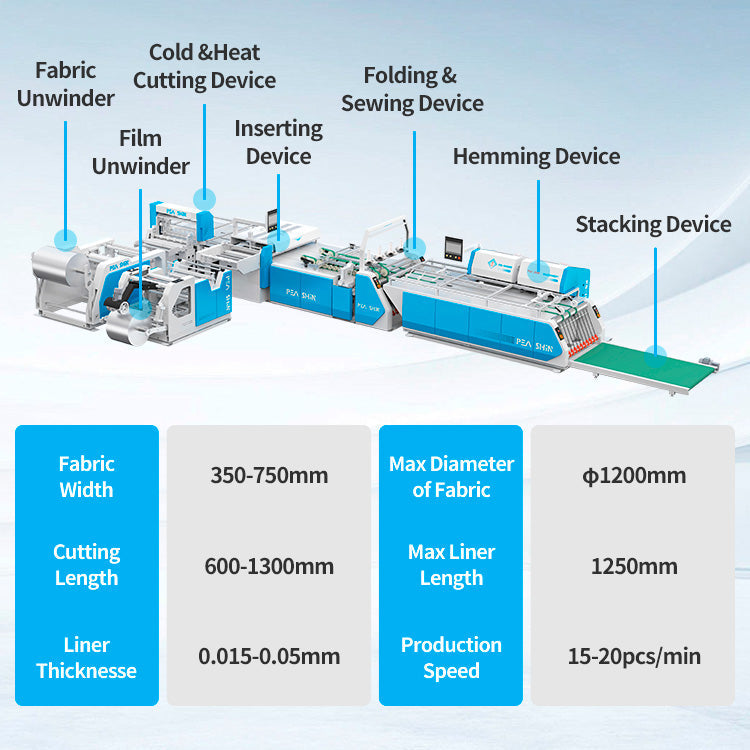
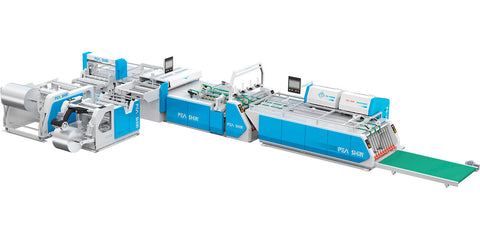
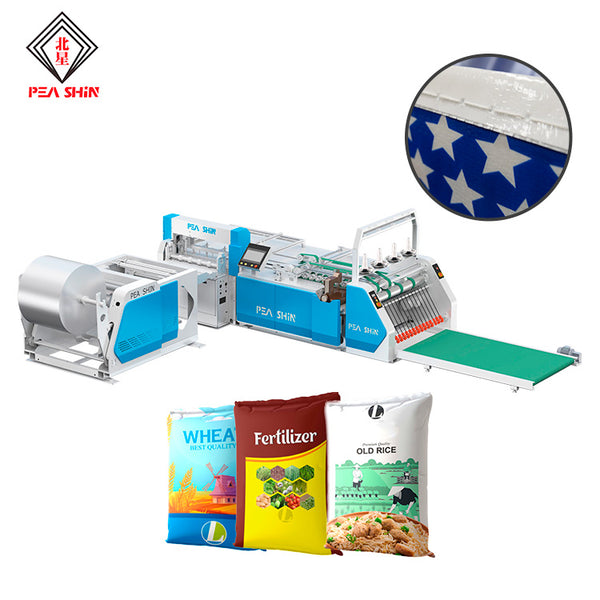
The machine uses servo motors with an optical code meter to control cutting length, maintaining accuracy of ±1.5mm across production runs. When recycled content climbs and tape tension drifts, this dual-servo approach keeps bag length consistent — bag after bag, shift after shift. The PS-QF800 platform delivers production speeds of 24–45 pcs/min with a fabric width range of 350–750mm and cutting lengths from 600–1300mm.

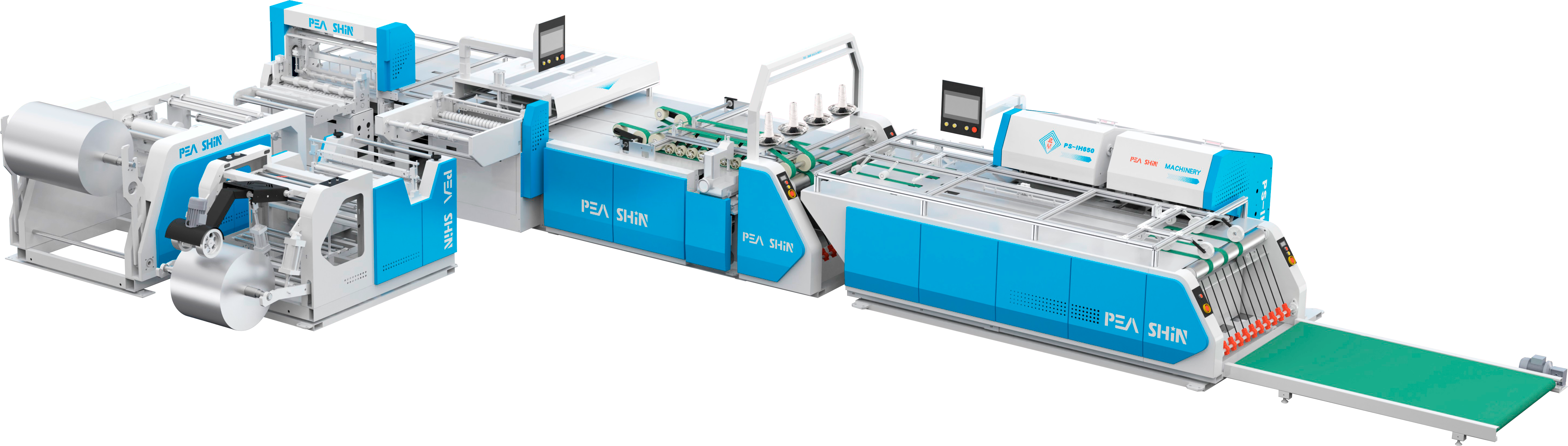
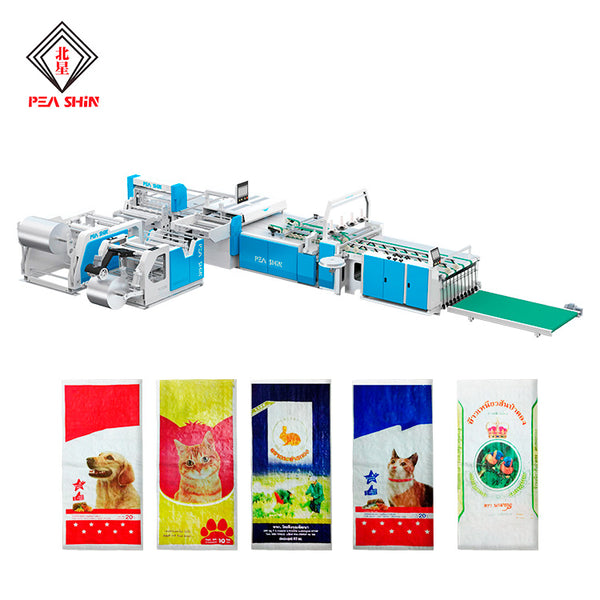
Figure: PEASHIN PS-QF800 automated converting line for woven fertilizer, grain, and feed sacks.
2. One-touch hot/cold cutting switch — one machine, multiple bag types
The machine is equipped with a cold and hot cutting knife unit, switchable with one touch via touchscreen and precisely controlled by servo drives. Hot cutting (servo-driven, double-mouth twisting) handles non-laminated bags. Cold cutting (straight blade, not flying knife) delivers cleaner edges for laminated and BOPP printed bags. For factories running cement bags one shift and grain bags the next, this eliminates the need for a second machine.
3. Integrated liner insertion and bottom sewing
The PS-IH650 configuration synchronizes PE liner feeding with outer woven fabric, handles liner thicknesses from 0.015mm to 0.05mm, and performs bottom sewing and hemming in one continuous flow. No intermediate handling. No work-in-progress buildup. One operator can run the entire line.
4. Built for high-rPP and mono-material fabrics
The shift toward mono-material and high-rPP fabrics is not slowing down. The machines that will remain competitive through 2030 are the ones engineered to handle this material shift. Servo-controlled tension and precise cutting compensation are not luxury features anymore — they are the difference between a production line that runs smoothly and one that generates costly rejects.
Technical Specifications & PPWR Compliance Summary
| Key Specification | PEASHIN Standard | PPWR & Export Advantage |
|---|---|---|
| Cutting Length Precision | ±1.5 mm (Dual servo + optical code meter) | Eliminates bag size drift caused by rPP tension variability |
| Production Speed | 24 – 45 pcs/min (PS-QF800) | High commercial output with robust seam reliability |
| Cutting Mechanism | One-touch switchable Hot & Cold cutting units | Prevents fraying on laminated, BOPP, and unlaminated fabrics |
| Liner Synchronization | 0.015 mm to 0.05 mm PE liner integration (PS-IH650) | Meets moisture barrier criteria for fertilizer and food chemicals |
| Labor Efficiency | 75% – 85% labor reduction (Single operator) | Replaces 4–6 manual stations and stabilizes operating margins |
The Labor Math That Makes the Decision for You
Industry data indicates that repetitive manual handling in bag converting — cutting, bottom sewing, liner inserting — can account for 40–60% of total direct labor hours in small to mid-sized woven bag operations.
A fully integrated converting line replaces four to six manual stations: cutting, liner placing, sewing, hemming, inspection, and stacking. The labor reduction ranges from 75–85% depending on the configuration and bag mix.
For a factory running two shifts, that is not merely an efficiency gain; it is a restructuring of the production cost base. In markets where labor costs are rising, the payback period on this automated upgrade is often measured in months, not years.
The Bottom Line
The EU's PPWR is not just a European policy — it is a global supply chain requirement. Every bag producer who wants to sell into regulated markets (or whose downstream buyers do) will need equipment that can process recycled materials at commercial yield.
PEASHIN's converting solutions provide servo-driven precision, one-touch hot/cold switching, integrated liner insertion and bottom sewing, and ±1.5mm cutting accuracy. It is built for factories that need to produce compliant bags, at competitive costs, without adding operational complexity.
Ready to Upgrade Your Woven Bag Production?
Transitioning to PPWR-compliant materials does not have to disrupt your ongoing plant operations. PEASHIN has successfully deployed automated woven bag converting equipment across Southeast Asia, the Middle East, Central Asia, and the Americas, helping packaging manufacturers modernize without costly trial-and-error.
PEASHIN Global Commissioning & Quality Commitment:
- Pre-Shipment Factory Acceptance Testing (FAT): Live video trials running your specific woven fabric and PE liner samples before machine dispatch.
- Turnkey On-Site Installation: Experienced service engineers dispatched for on-site leveling, line synchronization, and trial production at your facility.
- Comprehensive Staff Training: Complete hands-on training for operators and maintenance teams on servo calibration, tension control, and quick knife replacement.
- Global After-Sales & Rapid Spare Parts: Dedicated technical support and standardized wear components ready for immediate international delivery.
→ Contact PEASHIN's Technical Team for a Custom Line Layout & Quotation
References: PRM-TAIWAN PPWR industry analysis; Research and Markets Woven Plastics Machinery Global Market Report; ILO labor data and industry converting benchmarks; PEASHIN product specifications.